What is World Scholar's Cup?
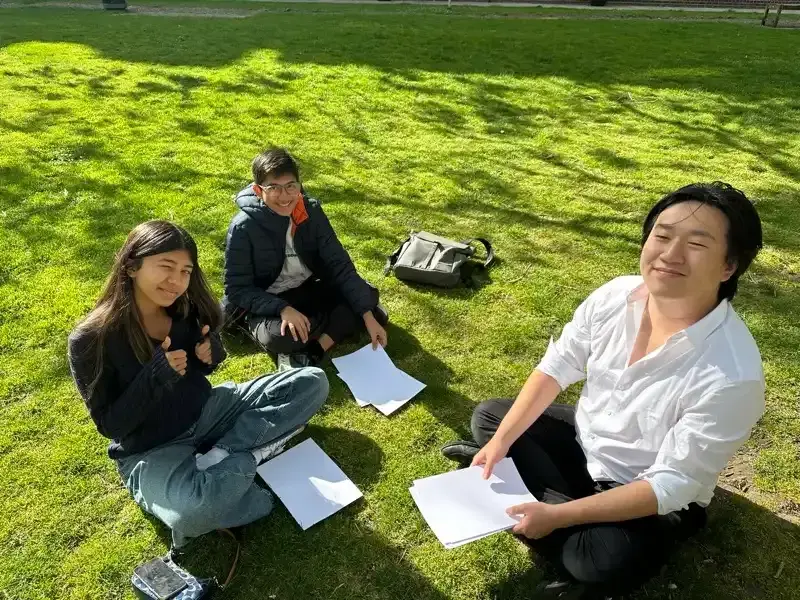
The World Scholar's Cup (WSC) is a global academic competition that brings together curious students from over 60 countries. But it's not like any competition you've experienced before.
Instead of testing memorization or isolated facts, WSC challenges you to think across disciplines, collaborate with teammates, and engage with fascinating topics through a unifying annual theme. For 2026, that theme is "Are We There Yet?"
6 Interconnected Subjects
Science, History, Social Studies, Arts, Literature, and a Special Area all connected by an annual theme.
Team-Based Competition
You compete as a team of 3 in most events, emphasizing collaboration over individual glory.
Multiple Ways to Win
Individual scores, team scores, school scores - there are many categories to earn medals.
Alpaca Mascot
Yes, there are alpacas. They're everywhere. You'll love them.
The Competition Pathway
Regional Round
Your starting point
Global Round
International competition
Tournament of Champions
Yale University
What to Expect at Your First Round
Your first WSC experience will likely be a Regional Round - a one or two-day event held in your country or region. Here's what a typical day looks like:
A Typical Competition Day
Note: Schedules vary by venue. Check your specific event for exact times.
Understanding the Four Events
WSC has four distinct events, each testing different skills. You'll compete in all of them during the competition.
Scholar's Challenge
Individual60 minutesA 120-question multiple choice test covering all six subjects.
First-timer tips:
- Don't spend too long on any single question
- You can mark more than one answer - fewer marks are worth more if you are right
- Never leave a question blank; a blank scores nothing
- Cross-curricular questions are common
Team Debate
Team15 min prep, then up to 4 min per speakerThree-on-three debates on motions connected to the curriculum. Each team debates three times.
First-timer tips:
- You won't know your position until shortly before - and you don't choose it
- There are no interruptions: every speech runs uninterrupted, so take notes instead
- Two-thirds of scholars have never debated before, so you are in good company
- You swap feedback with the other team after every round
Collaborative Writing
TeamTeam planning, then solo writing, then peer reviewThree to four prompts are offered and each teammate writes their own piece on a different one.
First-timer tips:
- You are not co-writing one essay - each of you writes separately
- Claim prompts fast so nobody is stuck with one they have no angle on
- No devices during the planning phase
- Save real time for the review phase at the end
Scholar's Bowl
TeamOne session, questions get harder as it goesEvery team in one theater, answering multimedia questions together on a shared clicker.
First-timer tips:
- Coordinate who answers what based on subject strengths
- You race the clock, not other teams - answering first earns no bonus
- Let video and audio clips finish; the deciding detail is often at the end
- Expect playful links between curriculum topics and pop culture
Deep Dive: Event Strategies for First-Timers
Now that you know the basics of each event, here's what first-timers specifically need to know to feel confident going in.
Scholar's Challenge
What to Expect
- 120 multiple choice questions across all 6 subjects
- Questions range from straightforward recall to tricky cross-curricular connections
- You'll encounter questions you definitely won't know - that's intentional
- The test is designed so no one gets everything right
First-Timer Strategies
- Don't panic when you see unfamiliar questions - everyone does
- Keep moving - skip difficult questions and return later
- Answer EVERYTHING - a blank scores nothing, and you may mark more than one option
- Look for connections between questions (later questions may help earlier ones)
- Trust your gut on questions you've studied
Mental Preparation
The Challenge is designed to be humbling. Even scholars who studied extensively will face questions that stump them. This is normal and expected.
Team Debate
What to Expect
- 3v3 debates on motions related to the curriculum
- 15 minutes of prep time once you receive the motion, with no devices
- Three debates, each speaker taking up to 4 minutes, with no interruptions
- You give the other team feedback after each round, and they give you theirs
- Positions (Pro/Con) are assigned - you might argue something you disagree with
First-Timer Strategies
- Focus on listening to opponents - responding is often more important than delivering
- Work as a team during prep time; don't just prepare your own speech
- Keep arguments simple and clear rather than complex and confusing
- It's okay if your debate isn't perfect - first debates rarely are
- Make eye contact with judges, not just opponents
Mental Preparation
Your first debate might feel awkward or scary. That's completely normal. Judges are looking for clear thinking and engagement, not polished performance.
Collaborative Writing
What to Expect
- Three to four prompts offered, and each teammate must take a different one
- You write your own piece - there is no single team submission
- Prompts can be creative, analytical, or persuasive
- Quality of ideas matters more than word count
First-Timer Strategies
- Use the shared planning phase to test each other's angle before writing
- Claim your prompt quickly - indecision eats the clock
- Write your ending before you polish the middle
- Read the prompt multiple times - make sure you're answering what's asked
- Treat the peer-review phase as real work, not a formality
Mental Preparation
The name confuses nearly every first-timer: you plan and review together, but the writing itself is yours alone. Focus on producing one piece you are proud of, and give your teammates honest notes at the end.
Scholar's Bowl
What to Expect
- Every team in one theater, each with a shared clicker
- Multimedia questions: video clips, music, and images on screen
- Questions cover all subjects - often linked to pop culture
- Questions get harder, and worth more, as the round goes on
First-Timer Strategies
- Coordinate with teammates on who answers which subjects
- Let clips play to the end - the deciding detail often comes last
- Always click something before time runs out; a blank scores nothing
- Don't panic after wrong answers - there's always the next question
- Ignore teams shouting answers; some are hoping you'll click the wrong one
Mental Preparation
Bowl is the most adrenaline-pumping event. It's supposed to be fun and exciting. If you make mistakes, laugh them off and keep going.
How to Prepare
The amount of preparation varies based on your goals. Here's a prioritized list of how to get ready for your first round.
Read the Literature Texts
The Literature component includes specific novels and short stories. Start reading early - they take time to absorb.
Study the Curriculum Guide
WSC publishes a curriculum guide outlining what will be covered. Use it as your study roadmap.
Practice with Your Team
Run mock debates, collaborative writing sessions, and bowl practice together.
Take Practice Tests
Past Scholar's Challenge questions are available. Practice under timed conditions.
Learn the Theme Connections
Understand how each subject connects to the annual theme ("Are We There Yet?" in 2026).
Honest Advice for First-Timers
Don't feel pressured to know everything. Many successful scholars entered their first round with minimal preparation and fell in love with the experience. Learning happens at the competition itself. The most important thing is to show up with curiosity and an open mind.
Finding and Building Your Team
Your team will be a huge part of your WSC experience. Here's how to find teammates and build a successful team dynamic.
How to Find Teammates
- Ask your school's WSC coordinator if other students are interested
- Check if your school has participated before - alumni might know interested students
- Some regional rounds help match individual scholars into teams
- Online WSC communities (Discord, Facebook) sometimes help connect scholars
- Consider asking friends who are curious learners, even if they've never heard of WSC
What Makes a Good Team
- Different subject strengths complement each other
- Similar preparation commitment levels reduce conflict
- Good communication and willingness to disagree constructively
- Reliability - showing up to practice and competition
- Supportive attitude when things go wrong
A balanced team covers all six subjects. Map your team's strengths:
Science & Technology
Who loves science news? Who understands tech trends?
History
Who reads history? Who remembers dates and patterns?
Literature
Who loves reading? Who analyzes stories naturally?
Arts & Music
Who appreciates art? Who knows music history?
Social Studies
Who follows current events? Who understands economics?
Special Area
Who connects ideas across fields? Who loves the theme?
Avoiding Team Conflict
- Agree on preparation expectations early (how much time will you spend?)
- Decide how decisions will be made if you disagree
- Create a communication channel (group chat) and check it regularly
- Address frustrations early rather than letting them build
- Remember: you're a team. Support each other especially when stressed
Competition Day Tips
Arrive Early
Give yourself time to find your room, settle in, and mentally prepare.
Bring Snacks and Water
It's a long day. Healthy snacks keep your energy up.
Stay with Your Team
You'll need to move together between events. Don't get separated.
Don't Stress About Mistakes
You won't know every answer. That's normal. Move on and stay focused.
Enjoy the Experience
Yes, it's competitive, but it's also supposed to be fun. Embrace the chaos!
What to Pack
The quick version is below — for the complete checklist, including culture-event gear and Global Round travel add-ons, see the full printable WSC packing list.
Essentials
- Student ID or registration confirmation
- Writing utensils (pencils, pens, erasers)
- Watch (phones are typically not allowed during events)
- Water bottle
- Snacks
- Comfortable clothing (it can be a long day)
Nice to Have
- Study materials for last-minute review
- Lucky charm (many scholars have one!)
- Small pillow for breaks
- Phone charger (for between events)
- Team matching accessories (many teams coordinate)
Leave at Home
- Electronic devices into test rooms
- Outside food into formal venues
- Stress - leave that at home!
Managing Nerves & Anxiety
Feeling nervous before your first competition is completely normal. Here's how to manage those feelings at different stages.
Before Competition
Normalize the nerves
Everyone feels nervous before their first competition. Even experienced scholars get pre-event jitters. This is normal.
Visualize success
Spend a few minutes imagining yourself calmly taking the test, confidently debating, collaborating smoothly. Mental rehearsal helps.
Focus on what you can control
You can't control the questions or your opponents. Focus on your preparation, your attitude, and your effort.
Sleep and eat properly
Anxiety is worse when you're tired or hungry. Prioritize rest and nutrition the days before.
During Competition
Breathe
When you feel panic rising, take three slow breaths. This physiologically calms your nervous system.
Ground yourself
Feel your feet on the floor, notice the room around you. This brings you back to the present moment.
Reframe difficulty
Instead of "this is too hard," try "this is challenging me to grow." Same situation, different experience.
Lean on teammates
You're not alone. Your team is there to support you. Let them, and support them back.
After Difficult Moments
Don't replay mistakes
What's done is done. Replaying it makes you feel worse and doesn't change anything.
Focus on the next thing
Every event is a fresh start. A bad debate doesn't affect your writing score.
Talk it out briefly
A quick "that was tough, but we're okay" with teammates, then move on.
Remember why you're here
You signed up for an experience, not just to win. The experience is happening right now.
A Note on Performance Anxiety
Some nervousness actually helps performance - it keeps you alert and focused. The goal isn't to eliminate nerves entirely, but to keep them at a level that helps rather than hinders. If you feel a bit nervous, that's your body preparing you to do well. Embrace it.
Making Friends & WSC Culture
WSC has a uniquely welcoming culture. Unlike many competitions, scholars here actively seek to connect with each other - even (especially!) with scholars from competing teams.
The Scarf Exchange
Scholars trade scarves from their schools with scholars from other countries. It's a beloved tradition at Global Rounds.
Alpaca Everything
The alpaca mascot appears on merchandise, decorations, and even live at some events. Scholars embrace the alpaca love.
Closing Ceremonies
The medal ceremonies are celebrations with music, dancing, and genuine joy. Win or lose, everyone celebrates together.
Lasting Friendships
Many scholars form friendships that last years. The WSC community stays connected through social media and reunions.
FAQs from First-Timers
How do I find a team?
Ask your school's WSC coordinator, or connect with other scholars in your area. Some regional rounds help match individual scholars into teams.
What if I'm not good at one of the events?
That's totally normal! Most scholars have strengths and weaknesses. Your team can balance different abilities, and you'll improve with practice.
Is it very competitive?
The atmosphere is uniquely supportive. Yes, you're competing, but scholars typically cheer for each other and make friends across teams.
What are Global Rounds?
Global Rounds are the next level after Regional Rounds. Teams qualify by meeting score thresholds. They're held in exciting locations worldwide.
Do I need to know everything in the curriculum?
No one knows everything. The goal is to learn as much as you can and make connections across subjects. Questions are designed to test understanding, not memorization.
What if I'm shy or introverted?
WSC welcomes all personality types. Many successful scholars are introverted. The team format means you can contribute in ways that suit you.
More Questions from First-Timers
What if my team has never debated before?
Most first-time teams haven't! WSC debate is designed to be accessible. Focus on clear thinking, listening to opponents, and working together. You'll improve with every round.
How competitive is the atmosphere?
WSC is uniquely friendly. Yes, you're competing, but the culture emphasizes learning and connection over cutthroat rivalry. Many scholars become friends with opponents.
What if I don't qualify for Global Rounds?
Many scholars don't qualify on their first try - and that's okay. The Regional experience itself is valuable. Most Global Round qualifiers didn't make it their first time either.
Is WSC worth it if I'm not sure I'll like it?
Absolutely. The worst case is you learn something new and try something different. Many scholars who were uncertain became WSC's biggest enthusiasts.
What if I'm much younger/older than other scholars?
WSC includes students from middle school through high school. Age differences exist but don't matter much - everyone's there to learn and compete.
Can I participate if English isn't my first language?
Yes! WSC has scholars from over 60 countries, many of whom speak English as a second or third language. The community is welcoming and understanding.
Final Thoughts
Your first World Scholar's Cup is the beginning of something special. Yes, there will be challenging moments - a debate that doesn't go your way, questions you don't know, time pressure that feels intense. That's all part of the experience.
But you'll also discover a community of curious, passionate people from around the world. You'll learn things that fascinate you. You'll grow as a thinker and collaborator. And yes, you'll probably become very fond of alpacas. Welcome to the World Scholar's Cup!